On writing, stuckness, and the difference between what we are and what we carry
The other day I was writing in the morning (à la Dorothea Brande and Julia Cameron,) and I was musing about my writing and what’d been going on, and not going on.
A project I had been excited about seemed to have lost its energy, and my writing practice had been feeling restless, flighty. Then, as those pages sometimes do, the musing went on and turned into a larger question about the state of my work. I went on for a paragraph or so, and then it all sort of welled up, and I wrote:
Ugh, I’m stuck
After a beat though, I paused and put my pen down. There was a different way to say this.
Do you know the other languages have a more useful way of describing an emotional or feeling state?
The one I'm most familiar with is Spanish. Spanish has two different verbs that mean “to be.”
The verb ser is used to describe permanent or fixed characteristics. Like, the sentence I am tall translates to Soy alta. Or I am from the United States becomes Soy de los Estados Unidos. Or She is my sister is translated as Ella es mi hermana.
Height, origin, and family membership don’t change. They’re permanent. So Spanish uses ser here.
But there are many times we need to use the verb to be when things aren’t permanent. Here Spanish uses estar to describe temporary locations or conditions. Like I am in my office becomes Estoy en mi oficina. The cat is on my desk becomes El gato esta sobre el escritorio.
I won’t be in my office later today and the cat surely won’t be on my desk longer than five or ten minutes.
Estar is also used to describe physical or mental states. I am tired or I am sad becomes Estoy cansada or Estoy triste. Just like me and the cat, the tiredness and the sadness are temporary and will, at some point, move on.
French treats a few English expressions about emotions with a different twist. In French, I am afraid or I am ashamed use the verb avoir (to have) instead of être (to be.)
So, I am afraid in English becomes J’ai peur in French. And I am ashamed becomes J’ai honte. Literally the phrase says, I have fear, and the other says I have shame.
Using to have turns the emotion into an object. Fear or shame then become something you at some point pick up or put down, like a suitcase or a book.
I think my favorite though is what I learned from a friend. The Irish language treats many emotional or feeling states as almost visitors. Ones who come to sit with or even on us.
To say I am sad or I am anxious in Irish, you’d say Tá brón orm or Tá imní orm. Which most literally translates in English to I have sadness upon me, or I have anxiety upon me.
It’s the same with happiness. To say I am happy in Irish, you’d say Tá áthas orm, or I have happiness on me.
The language recognizes and holds these states as temporary, passing states, not a permanent declaration of who we are.
When we say something (on the page, to ourselves, in our minds, or to other people) it has an impact. And when I write I am sad (or anxious or stuck) it feels stickier, more permanent. More ugh.
I like what these other languages offer me.
I am me, and you are you. We are us. And, in this moment, our whole, healthy self may be experiencing a temporary state of sadness or anxiousness. Or, like me with my writing, stuckness.
Remembering this, I picked up my pen and wrote I have stuckness on me and my writing now.
It felt true. A gentle acknowledgement of how I was feeling, and it offered me space. Space for the possibility that it would soon shift.
What about you?
Are you experiencing something about your writing or your relationship with your writing right now? If so, I invite you to notice whatever word you'd reach for to describe it, perhaps stuck, blocked, tired, or absent, and try the Irish way instead. Not "I am ___" but "I have ___ on me."
How does that feel? What shifts?
Writing Invitation
I encourage you to open your notebook and answer this week's writing invitation with whatever wants to come through.
Online Writers' Studio for Women
If you’re interested in receiving more writing invitations and having a place to write on a more consistent basis, you can find a new one every day and the space to see where it takes you in my daily co-writing sessions, which are just one part of the Online Writers’ Studio for women. The Studio also has regular writing workshops, weekly intuitive energy readings, and meditative writing sessions.
Otherwise, come back next week, and I’ll share another one.
I hope you find this newsletter useful. If you do, would you consider sharing it with friend via email or sending them this link to sign up to my newsletter? It helps me grow and reach more people with my message, and I would really appreciate it.
You're receiving this email because either you signed up via my website, attended one of my workshops or have otherwise worked with me. If you'd rather not receive emails from me, you can unsubscribe at any time below.
Diane Douiyssi LLC
2805 S Moss Stone Ave
Sioux Falls, SD 57110
United States
Unsubscribe
Writing Invitation
I encourage you to open your notebook and answer this week's writing invitation with whatever wants to come through.
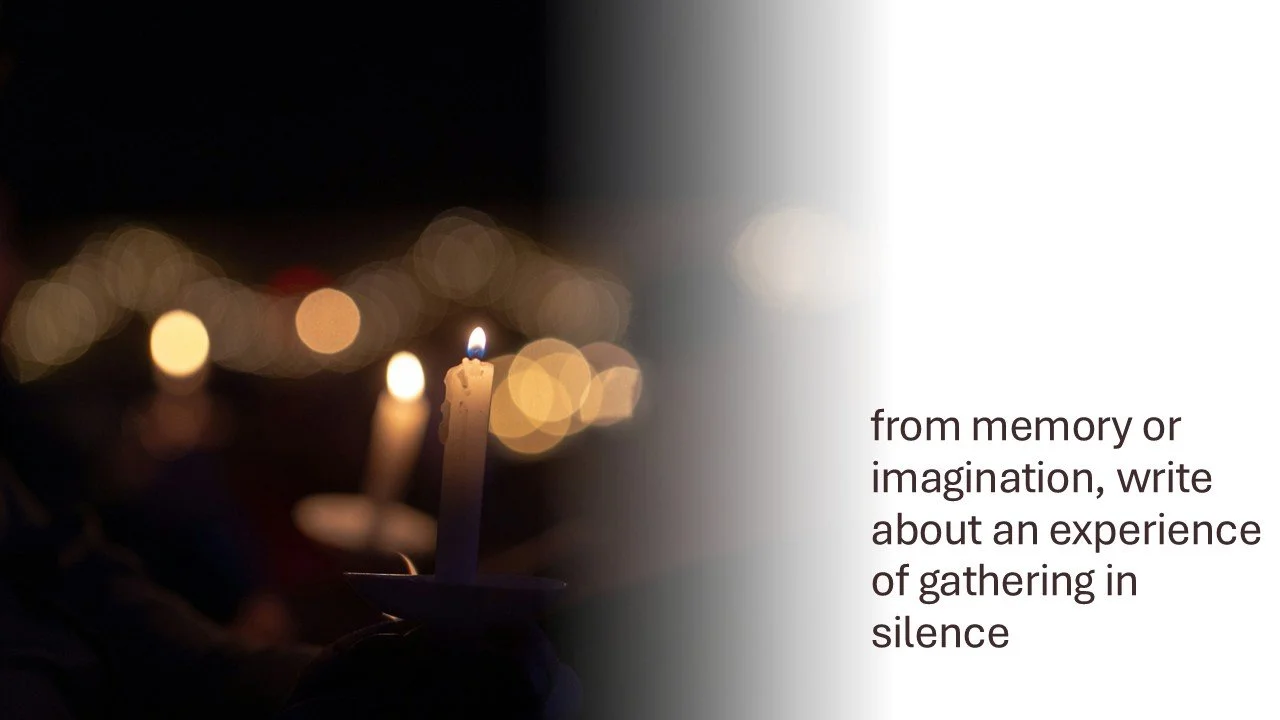
Photo used in writing invitation by Tim Umphreys on Unsplash
Online Writers' Studio for Women
If you’re interested in receiving more writing invitations and having a place to write on a more consistent basis, you can find a new one every day and the space to see where it takes you in my daily co-writing sessions, which are just one part of the Online Writers’ Studio for women. The Studio also has regular writing workshops, weekly intuitive energy readings, and meditative writing sessions.
Otherwise, come back next week, and I’ll share another one.